
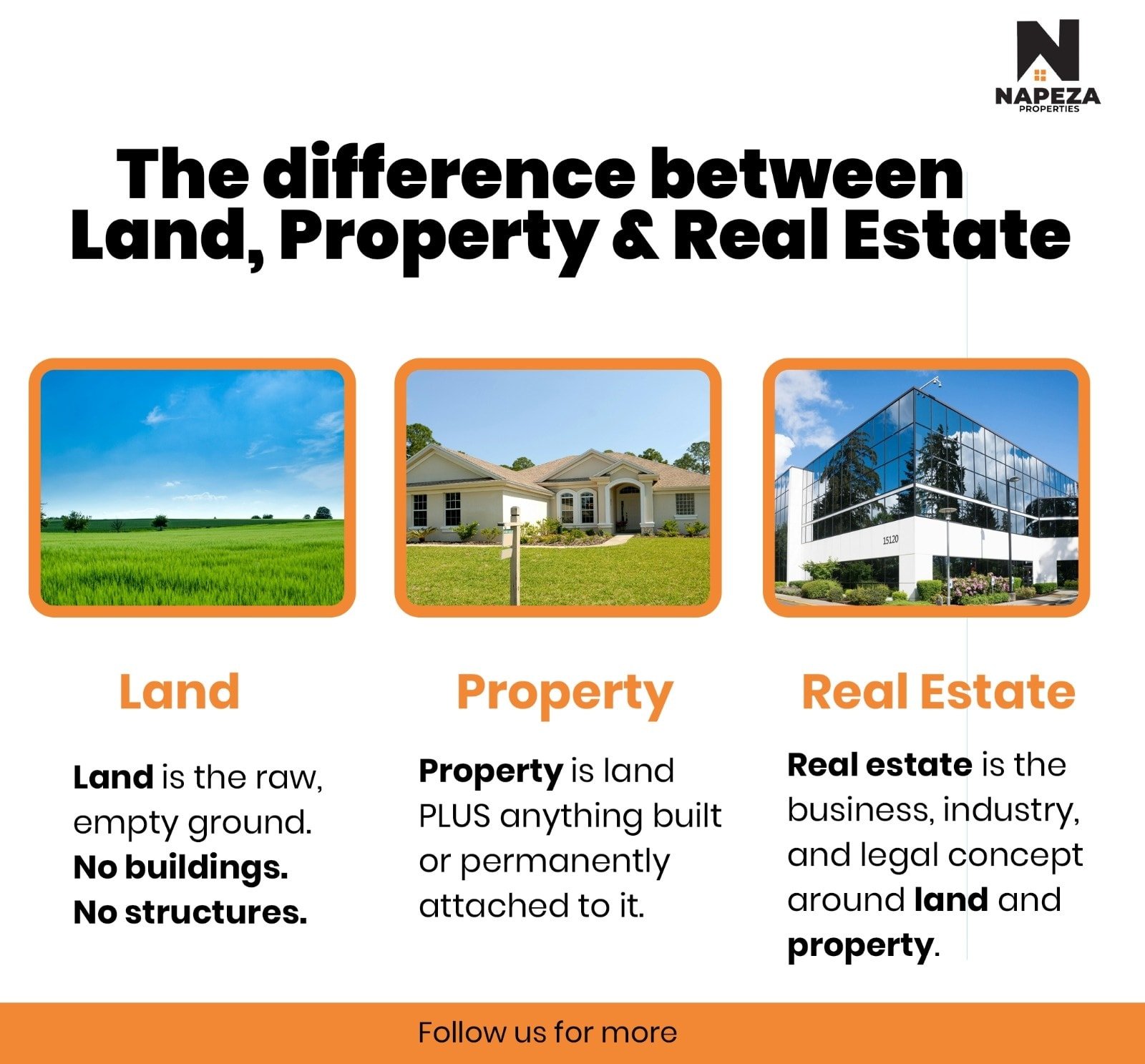
The Difference Between Land, Property and Real Estate
When navigating the world of buying, selling, or investing, three terms come up constantly — land, property, and real estate. Many people use them interchangeably, but understanding the distinction between them can make a significant difference in how you approach your investments and legal agreements. At Napeza Properties, we believe an informed client is an empowered client.
What Is Land?

Land refers to the earth’s surface in its natural state — the ground beneath your feet, untouched and undeveloped. In Zambia, land is a foundational asset. It includes the soil, rocks, minerals, water, and everything naturally occurring on or beneath the surface. Land has no structures, no improvements, and no additions made by human hands.
For investors, raw land represents one of the most straightforward forms of ownership. Its value is driven by location, accessibility, and potential for future development. In a growing economy like Zambia’s, well-positioned land can appreciate significantly over time, making it one of the most attractive long-term investment options available.
What Is Property?
Property is a broader concept. It refers to land plus anything permanently attached to it — whether natural or man-made. This includes buildings, fences, roads, and other structures. Once a house is built on a piece of land, that land becomes property.
There are two key categories worth knowing. Real property refers to land and all permanent attachments to it, while personal property refers to movable possessions — furniture, vehicles, equipment, and so on. When you purchase a home or commercial space, you are acquiring real property, which is a legally recognized and protected asset.
What Is Real Estate?
Real estate encompasses all of the above — land, property, and the legal rights associated with ownership. It is both a physical asset and a legal concept. Owning real estate means you hold rights to use, sell, lease, or develop that asset within the boundaries of the law.
Real estate is typically divided into four categories: residential, which includes homes and apartments; commercial, such as offices and retail spaces; industrial, which covers warehouses and manufacturing facilities; and land, which includes undeveloped plots and agricultural spaces. At Napeza Properties, we work across all four to ensure our clients find exactly what suits their needs.

Why Does the Distinction Matter?
Understanding these differences is especially important when it comes to legal documentation and title processing. In Zambia, land ownership is governed by specific legislation, and the type of asset you are acquiring determines the legal process involved. Buying raw land requires different steps than purchasing a built property or commercial real estate.
Knowing what you are buying also helps you ask the right questions, assess value more accurately, and avoid costly misunderstandings. Whether you are a first-time buyer, a seasoned investor, or a developer exploring new opportunities, clarity on these terms puts you in a stronger position at every stage of the journey.
Let Napeza Properties Guide You
Navigating land, property, and real estate in Zambia doesn’t have to be complicated. Our team of experienced consultants is here to simplify the process, answer your questions, and connect you with the right opportunities. From raw land to fully developed commercial spaces, Napeza Properties is your trusted partner every step of the way.
Ready to take the next step? Get in touch with us today.
1 Comment
Charge Marry
October 10, 2023Awesome Theme, I like it